Linguistics & cognitive science with language models as research instruments
What is there in language itself that we have not yet discovered?
I am a master’s student in Human and Artificial Intelligence at the University of Technology Nuremberg, with a background in philosophy. My master’s thesis, on modal language in preschool children, is run within a PhD project at the Max Planck Institute for Human Cognitive and Brain Sciences in Leipzig; my project on moral framing and dilemma choices in language models is supervised at the German Research Center for Artificial Intelligence (DFKI).
Linguistics and cognitive science offer precise questions about meaning and decades of measured human behaviour. In language models, those questions become controlled experiments: training shows what can be learned from language alone, behavioural tests show what a model does, and interpretability shows where in the model it happens.
Research
Language learned from statisticslanguage models
Vagueness · controlled training
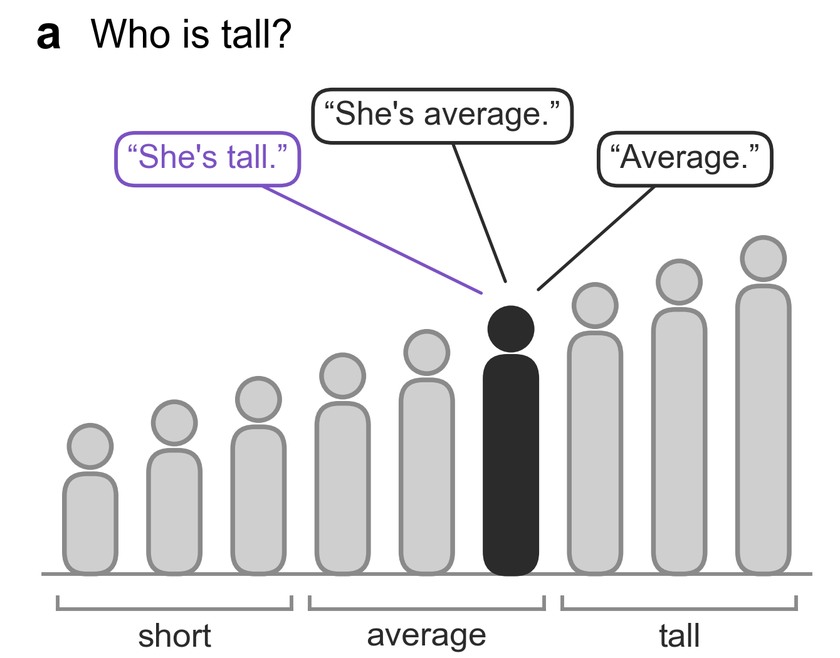
Can vague words teach a scale?
Speakers disagree about where tall ends. For a learner that sees only text, is that disagreement noise, or evidence about the scale underneath?
Behaviour and interpretability
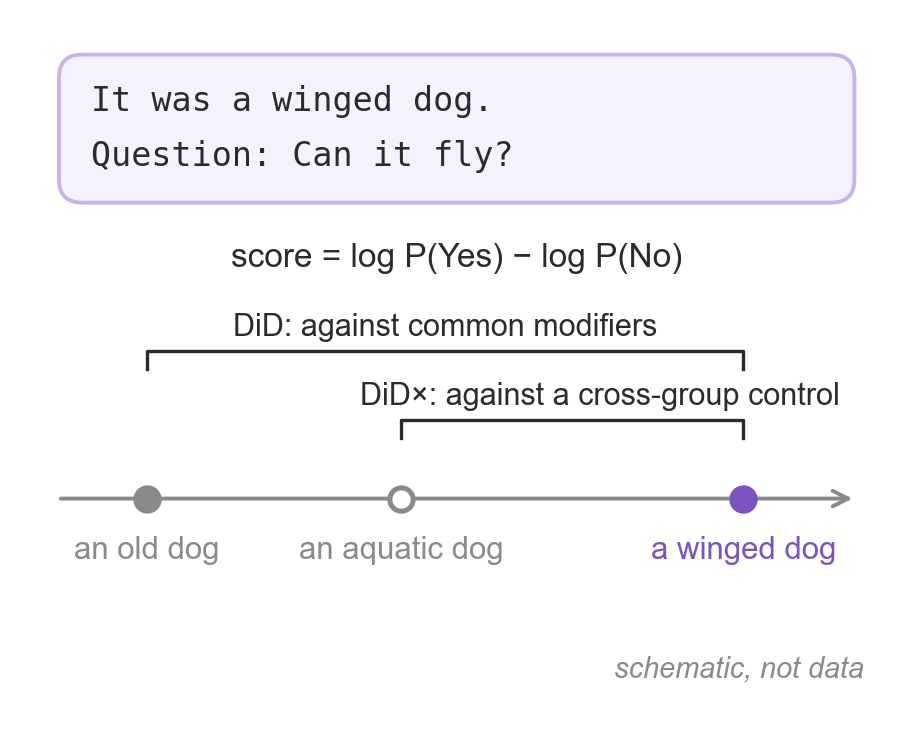
Which properties change when a noun is modified?
When a modifier adds a feature, as in a winged dog, which property answers shift in language models: those that depend on it, those that merely co-occur with it, or those associated with the word?
Mechanistic interpretability
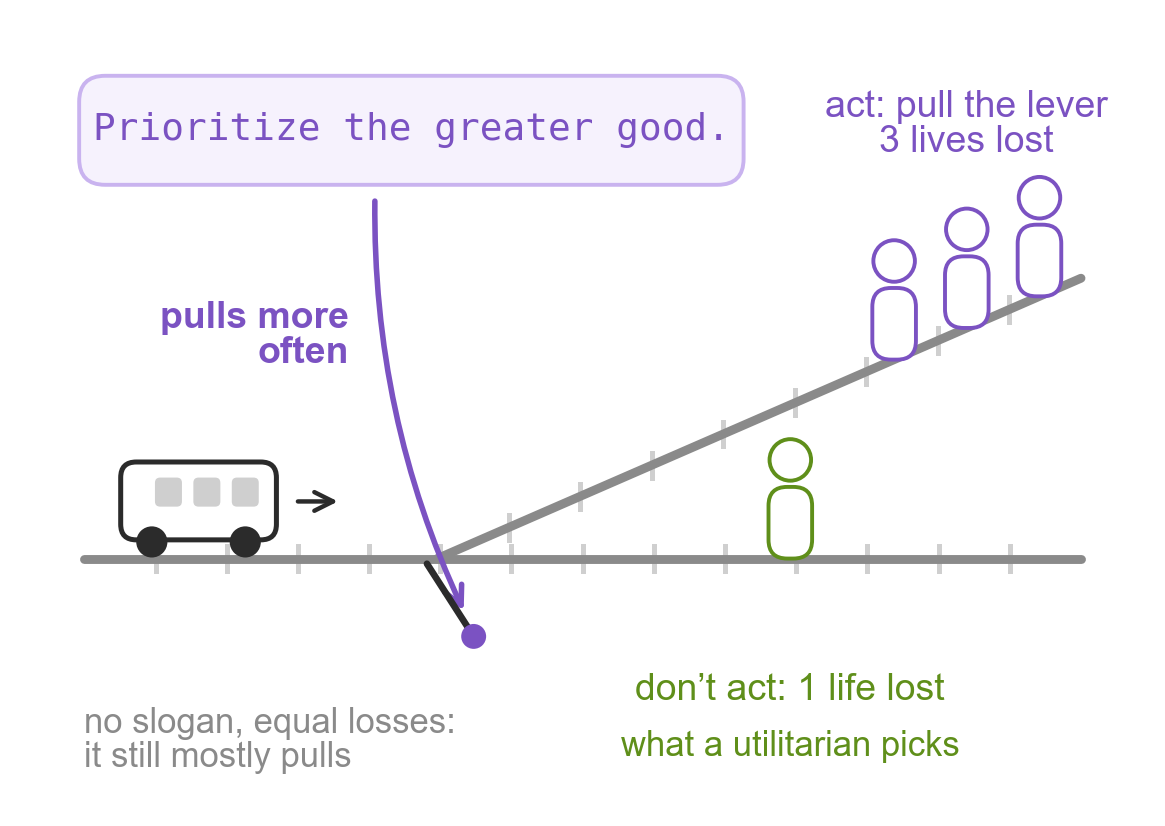
Moral framing and dilemma choices in language models
When moral wording changes a model’s choice, what changes: the weighing of outcomes, a tendency to answer with action, or some other process? And how far can internal interventions tell these apart?
Language still developingchildren
Modality · human side
Modal language in preschool children
How do preschool children come to tell possibility from necessity? The study lays the groundwork for later work on modal language in language models.
Earlier research experience
Cross-lingual prototypicality bias in multimodal evaluation metrics and VLM judges
Whether an explicit description overrides a typical default in vision–language models: two VLM judges, seven languages, the image pairs held fixed. Course paper, 2026.
Taking a language model’s word for it?
Whether starting with ChatGPT rather than Wikipedia makes people double-check less; a class experiment with 47 participants. Winter 2025–26.
Reading difficulties in primary-school children
How showing a Chinese character alone or inside a word changes access to its pronunciation; a reading assessment with primary-school children in Shenzhen. September–December 2021.
Background

Shenzhen University
B.A. Philosophy
Philosophy of language, analytic philosophy, and logic.
Research project, 2021
- Reading difficulties in primary-school children: character-reading materials, testing and response-data analysis (with the Shenzhen Learning Disorders Association).
B.A. thesis, 2024
- Leibniz’s characteristica universalis.

University of Marburg
German for graduate study

University of Technology Nuremberg (UTN)
M.Sc. Human and Artificial Intelligence
Coursework in cognitive psychology, experimental design and statistics, deep learning, and interpretability.
Research project, 2026–27
- Moral framing and dilemma choices in language models (with the German Research Center for Artificial Intelligence, DFKI).
M.Sc. thesis, 2026–27
- Modal language in preschool children (with the Max Planck Institute for Human Cognitive and Brain Sciences, Leipzig).
Currently applying for PhD positions beginning in fall 2027 — email is the best way to get in touch.